
Best Sewing Machine in India 2026
Sewing machine listings shout stitch counts and 'free home demo'. Owners report a different reality - demos that never arrive, thread that snaps on thick fabric, and boxes missing accessories. We ranked six machines on what matters: reliable stitching, thick-fabric handling, and a brand you can get serviced.
The quick answer
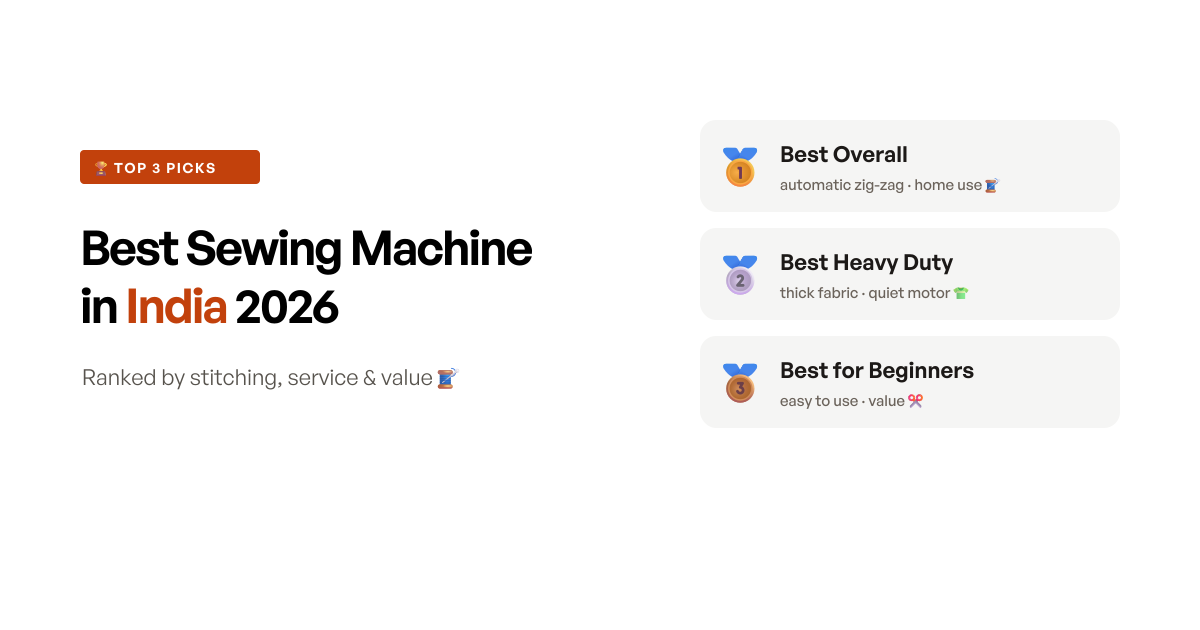
The Usha Janome Dream Stitch wins on the two things that actually decide a home sewing machine in India: it does the everyday jobs - hems, kurtis, kids’ clothes, alterations - reliably, and Usha Janome has by far the widest service and spares network, so you can get it fixed when the bobbin jams in year two. It is light-duty, so it is not the machine for denim or many layers. If that is what you sew, the Singer HD 4323 is the heavy-duty upgrade with a quiet brushless motor. If you want the lowest sensible price, the made-in-India Singer 1408 is the sturdy value starter, and the Brother JA20 is the smoothest and most beginner-friendly to use - as long as Brother’s thin service network reaches your city.
Quick comparison
Six sewing machines side by side, ranked by score - the type, what each one is built for, and a Buy button for the impatient.
- 8.7 scoreBest overall
Usha Janome Dream Stitch Automatic Zig-Zag Sewing Machine
The everyday home machine most people should buy - light-duty but dependable, and the easiest brand in India to get serviced anywhere.
Read the reviewapprox. ₹10,426 - 8.5 scoreBest for thick fabric
Singer HD 4323 BLDC Heavy Duty Sewing Machine
The capable upgrade - a quiet brushless motor and heavy-duty build for denim, layers and someone who'll grow into more stitches, at nearly double the price.
Read the reviewapprox. ₹19,990 - 8.3 scoreBest value starter
Singer 1408 Sewing Machine
A sturdy, full-size, made-in-India machine at the lowest sensible price - if you're willing to learn threading yourself, because the demo rarely turns up.
Read the reviewapprox. ₹9,585 - 8.2 scoreBest for beginners
Brother JA20 Electric Sewing Machine
The smoothest and most forgiving machine here to actually use, with an easy top-load bobbin - just make sure Brother's thin service network reaches your city.
Read the reviewapprox. ₹8,749 - 7.9 scoreBest for stitch variety
Usha Janome Allure Automatic Zig-Zag Sewing Machine
A step up in stitches and feet over the Dream Stitch, on the same wide service network - worth it only if you'll genuinely use the decorative and stretch stitches.
Read the reviewapprox. ₹13,999 - 7.6 scoreBest budget portable
Akiara Mini Portable Sewing Machine with Table Set
A cheap, tiny tool for quick repairs and kids learning to sew - useful for what it is, as long as you never ask it to sew real clothes or thick fabric.
Read the reviewapprox. ₹1,799
How we shortlisted
“Best sewing machine” is a search where the loudest number on the box - the stitch count - is the one that misleads most. A machine advertising 200 stitches sounds ten times better than one with 20, but a home sewer uses maybe five: straight, zig-zag, a stretch stitch, a buttonhole and the occasional decorative pass. Beyond that, the extra patterns are dials you’ll never turn. So we ignored stitch counts and scored the evidence for what a machine actually does day to day: whether it sews reliably without the thread snapping, whether it can handle the fabric you feed it, and - the quiet decider in India - whether the brand turns up when it breaks.
That last point runs through this whole category. Two things recur in the verified reviews of every brand here. The first is a “free home demo” that owners book three, four, five times and that simply never arrives - which matters more than it sounds, because a beginner who is never shown correct threading blames the machine when the thread breaks. The second is service reach: the difference between a Usha you can get repaired in a Tier-2 town and a Brother whose owner was refused a mechanic for buying online. Those two failure modes moved the rankings more than any spec.
That gave us six picks along the axis buyers actually decide on - capability versus price versus how much you’ll really sew: the everyday home winner (Usha Dream Stitch), the heavy-duty machine for thick fabric (Singer HD 4323), the sturdy value starter (Singer 1408), the smoothest beginner machine (Brother JA20), the step-up for stitch variety (Usha Allure), and the cheap portable for light repairs (Akiara Mini). Two heavily-bought machines shaped the list by being left off it. We dropped the Singer Solo because its high rating turned out to be borrowed - its recent verified reviews are for an unrelated overseas machine, not the India cast-iron model, so there is no honest owner evidence to score. And we left out the Usha Umang straight-stitch composite: it is cheap, but its reviews carry a genuine pattern of build and warranty complaints (cracked parts, warranty claims met with a bill, and “second-hand, repainted unit received”), and a straight-stitch-only machine is outclassed by the automatics above and undercut by the mini below.
At a glance: 6 sewing machines, what each one is best for
| Machine | Type | Stitches | Best for | Weight | Warranty | Price (approx.) |
|---|---|---|---|---|---|---|
| Usha Janome Dream Stitch | Automatic zig-zag | 7 built-in | Best overall (everyday home) | 5.9 kg | 2 yr | ₹10,426 |
| Singer HD 4323 BLDC | Heavy-duty electric | 23 built-in | Thick fabric / denim | 6 kg | 2 yr | ₹19,990 |
| Singer 1408 | Electric, metal frame | 8 built-in | Value starter | ~6 kg | 2 yr | ₹9,585 |
| Brother JA20 | Electric zig-zag | Utility + zig-zag | Beginners (easiest to use) | 6 kg | 2 yr | ₹8,749 |
| Usha Janome Allure | Automatic zig-zag | 13 built-in | Stitch variety | 7.4 kg | 2 yr | ₹13,999 |
| Akiara Mini | Portable mini | Straight stitch | Cheap light repairs | 1.35 kg | 1 yr | ₹1,799 |
The 6 picks, reviewed
1. Usha Janome Dream Stitch - best overall home sewing machine
The Usha Janome Dream Stitch wins this round the way sensible home appliances usually do - not by being the most capable, but by being the one you can rely on and the one you can get fixed. Among the largest body of reviews we read for any machine here, the praise is strikingly consistent: it is exactly right for everyday home stitching. Owners use it for hems, kurtis, kids’ clothes and alterations, and first-timers get going on it without much trouble. One owner sums up the mood of the reviews - a perfect buy for regular stitching at home.
What separates it from better-specced rivals is service reach. Usha Janome runs the widest service-and-spares network of any brand on this list, and in India that is not a footnote - it is the difference between a machine you can repair in a Tier-2 town and one that becomes a paperweight when a part wears. Add a compact free-arm body under 6kg that lifts onto the dining table and stores away easily, a 4-step buttonhole, and a 2-year warranty, and you have the machine most households should default to.
The caveats are honest and important. It is a light-duty machine - owners are explicit that it is for light stitching and fancy work, and that thread breaks or it struggles when you push thick denim or several layers through it. The advertised free home demo is unreliable, so plan to learn threading from the manual, and because threading and tension are manual, there is a real learning curve - get the tension wrong and the thread snaps, which is behind a lot of the early one-star frustration. And check the box on arrival, because a missing accessory or screw turns up often enough to be a pattern. Buy it for what it is - the dependable everyday home machine with the best service behind it - and it is the one to beat.
Key specifications
- Type
- Automatic zig-zag, free arm
- Built-in stitches
- 7 (14 stitch functions)
- Buttonhole
- 4-step
- Applications
- lace fixing, quilting, smocking, rolled hemming
- Speed
- 550 stitches/min
- Bobbin
- Auto-tripping winder; manual needle threading; manual tension
- Weight
- 5.9 kg
- Warranty
- 2 years
- Country of origin
- Thailand
Pros
- Owners across the largest body of reviews here call it exactly right for everyday home stitching - hems, kurtis, kids' clothes and alterations - and easy for a first-timer to get going on
- Usha Janome has the widest service-and-spares reach of any brand on this list, extending well past the metros - the practical reason it's the default India recommendation
- Compact free-arm design at under 6kg is easy to lift onto the dining table, use, and put away; the auto-tripping bobbin winder and 4-step buttonhole cover what a home sewer actually needs
- A 2-year warranty and a huge installed base of owners, so spares and someone who knows the machine are rarely far away
Cons
- It's a light-duty machine and owners are clear about it - fine for light stitching and fancy work, but the thread breaks or it struggles when you push thick or multi-layered fabric through
- The advertised free home demo is unreliable - several owners booked it repeatedly and it never came, leaving beginners to learn threading from the manual
- Manual needle threading and manual tension mean a real learning curve; set the tension wrong and the thread snaps, which is behind a lot of the early frustration
- Boxes turn up with a missing accessory or screw often enough to be a pattern - check the contents the moment it arrives
Who should buy this
The home sewer who wants a dependable everyday machine for hems, alterations, kurtis and kids' clothes, and who values being able to get it serviced almost anywhere in India. It is light, easy to store, covers the stitches a household actually uses, and sits on the widest service network here. Best for a beginner or occasional sewer treating this as a long-term home tool rather than a hobby-grade project machine.
Skip if
Skip if you regularly sew denim, canvas or several layers at once - this is a light-duty machine and owners report thread breakage and struggle on thick fabric; the heavy-duty Singer HD 4323 is built for exactly that.
Ready to buy?
Usha Janome Dream Stitch Automatic Zig-Zag Sewing Machine
2. Singer HD 4323 BLDC - best for thick fabric
The Singer HD 4323 is the machine for the buyer whose sewing has outgrown hems. Its headline is the BLDC (brushless) motor, and unusually the reviews back the marketing: owners single out how quiet it runs and how much more it powers through, and it is built for thick fabric and continuous sewing rather than the occasional seam. If denim, curtains, bags or layered fabric are a regular part of what you make, this is the machine on the list that won’t stall on them.
It is also the most capable here on paper in a way that is genuinely useful for someone doing more: 23 built-in stitches, an adjustable 6mm stitch width, three needle positions and a 1-step automatic buttonhole. Repeat Singer owners rate it highly - one describes it as their third Singer - and several call it easy to use and good value at the sale price, with an LED light and automatic bobbin winding making day-to-day work smoother.
The reasons it sits second, not first, are price and service. At around ₹19,990 it is nearly double the everyday winner, and most home sewers will never use its extra capability - you are buying headroom, not features you’ll touch. And service is the soft spot: a run of owners report the machine faulting inside the first year and Singer’s engineers slow to respond or dismissive on the phone, which stings on a machine this expensive. The new functions confuse first-timers, the promised demo often doesn’t materialise, and the usual missing-accessory complaints recur. Buy it because you genuinely sew thick fabric or want to grow into more - not because bigger numbers feel safer.
Key specifications
- Type
- Heavy-duty electric, free arm
- Motor
- BLDC (brushless)
- Built-in stitches
- 23 (58 stitch functions)
- Buttonhole
- 1-step automatic
- Stitch width
- adjustable up to 6mm; adjustable length
- Needle positions
- 3
- Bobbin
- Automatic winding; LED light
- Weight
- 6 kg
- Warranty
- 2 years
- Country of origin
- India
Pros
- The BLDC (brushless) motor is the real story - owners single out how quiet it runs and how much more it powers through, and it's built for thick fabric and continuous sewing rather than the odd hem
- The widest capability on this list: 23 built-in stitches, an adjustable 6mm stitch width, three needle positions and a 1-step automatic buttonhole - more than a home sewer needs, but genuinely useful for someone doing more
- Repeat Singer owners in the reviews rate it highly - one on their third Singer - and several call it easy to use and good value at the sale price
- LED light, automatic bobbin winding and a 2-year warranty round out a machine that feels a clear step up from the entry level
Cons
- At around ₹19,990 it's nearly double the everyday winner, and most home sewers will never use its extra capability
- Service is the soft spot - a run of owners report the machine failing inside the first year and Singer's engineers slow to fix it or dismissive on the phone
- All the new functions confuse first-timers, and - as with everyone here - the promised home demo often doesn't materialise, so you're on your own to learn it
- The usual missing-accessory-in-the-box complaints recur; check the kit against the listing on arrival
Who should buy this
The buyer who sews more than hems - denim, curtains, bags, layered fabric - or expects to grow into more stitches and wants a quiet, powerful machine they won't outgrow. The brushless motor and heavy-duty build are the draw, and the stitch range gives room to improve. Best for a confident beginner or returning sewer who treats the higher price as buying headroom, not features for their own sake.
Skip if
Skip if you only sew light home stitching and hems - you'll pay nearly double for capability you won't touch, and the Usha Dream Stitch does the everyday job for far less.
Ready to buy?
Singer HD 4323 BLDC Heavy Duty Sewing Machine
3. Singer 1408 - best value starter
The Singer 1408 answers the question most first-time buyers actually ask: what is the cheapest full-size machine that isn’t a toy? Its answer is a heavy-duty internal metal frame, and that frame is the reason to buy it - owners call it heavy and stable, the kind of sturdiness a plastic-bodied machine can’t match at this price. It is made in India, runs at 800 SPM (the fastest mainstream machine here), and comes with 8 useful built-in stitches, a 4-step buttonhole and a snap-on presser foot. Owners consistently rate it a good, easy first machine once they are past the threading, and one beginner describes stitching tote bags, crop tops and skirts on it happily.
At around ₹9,585 it is the value entry into a real machine, and the metal frame means it is one you can grow on rather than replace in a year.
Its weaknesses are the category’s usual two, sharpened by the price. Thread breaking and tension trouble is the recurring complaint - much of it the no-demo learning gap, but it frustrates beginners early, and the “free online masterclass” owners were promised is a running sore that many report booking with no response. Delivery is the other risk: some units arrive with parts missing, damaged, or - in a few accounts - the wrong Singer model in the box, so buy from a listing sold and shipped by Amazon and check the contents on arrival. Treat the demo as marketing and plan to self-teach, and it is the smartest sub-₹10,000 full-size machine here.
Key specifications
- Type
- Electric, free arm
- Built-in stitches
- 8 (24 stitches, 4 buttonhole styles)
- Buttonhole
- 4-step
- Speed
- 800 stitches/min
- Frame
- Heavy-duty internal metal frame
- Presser foot
- Snap-on; stitch-selector dial
- Weight
- ~6 kg
- Warranty
- 2 years
- Country of origin
- India
Pros
- The heavy-duty internal metal frame is the reason to buy it - owners call it heavy and stable, the kind of sturdiness a plastic-framed machine can't match at this price
- Made in India, 800 SPM (the fastest mainstream machine here), 8 useful built-in stitches, a 4-step buttonhole and a snap-on presser foot - a genuine full-size machine, not a toy
- Owners consistently rate it a good, easy first machine for beginners once they get past threading, and value for the money
- A 2-year warranty and a simple stitch-selector dial that's easy to understand
Cons
- Thread breaking and needle/tension trouble is the recurring complaint - much of it the no-demo learning gap, but it frustrates beginners early on
- The 'free online masterclass / home demo' is a running sore - owners report booking it repeatedly with no response, so treat it as marketing, not a real service
- Some units arrive with parts missing, damaged, or - in a few accounts - the wrong Singer model in the box; buy sold and shipped by Amazon and check on arrival
- The outer body is plastic over the metal frame, and a few owners expected it to feel more solid
Who should buy this
The beginner or occasional home sewer who wants a sturdy, full-size, made-in-India machine at the lowest sensible price, and is willing to learn threading from the manual or a few YouTube videos. Its metal frame and 800 SPM make it a real machine to grow on. Best for a self-starter on a budget who won't miss the in-person demo that rarely arrives anyway.
Skip if
Skip if you need to be walked through setup in person - the demo rarely happens, so if you can't self-teach threading and tension, a machine bought from a local dealer who sets it up for you may serve you better.
Ready to buy?
Singer 1408 Sewing Machine
4. Brother JA20 - best for beginners
The Brother JA20 is the machine owners most enjoy using, and for a nervous beginner that counts for a lot. The reviews here carry the highest satisfaction of any machine on the list: owners describe smooth stitching, a smooth foot pedal and a solid build, and several a year in report it still running happily. Brother is a serious sewing-machine maker, and it shows in how unfussy the machine feels.
The standout practical feature is the top-load (drop-in) bobbin. On most machines here the bobbin loads from the front in a case you have to seat correctly, which is exactly where beginners jam the thread; the JA20’s drop-in bobbin is easier to thread and far less jam-prone, and it takes real friction out of learning. With an LED light, zig-zag and utility stitches and a gentler learning curve than the Usha and Singer automatics, it is the least intimidating machine here to start on.
What keeps it in fourth is service reach, and it is a serious caveat in India, not a quibble. Brother’s network is the thinnest on this list: one owner was refused a mechanic outright for having bought the machine online, another reported no service centre near Siliguri. If you are outside a metro, a fault could leave you stuck. It is also a simple-stitch machine - owners note it’s for basic stitching, not heavy or professional work - and a couple hit thread-breaking or bobbin jams within a week. Buy it for the pleasant, forgiving experience if Brother service reaches your city; if it doesn’t, a Usha is the safer call.
Key specifications
- Type
- Electric, zig-zag
- Bobbin
- Top-load (drop-in)
- Stitch selection
- Dial (utility and zig-zag stitches)
- Light
- LED
- Control
- Foot pedal
- Weight
- 6 kg
- Warranty
- 2 years
Pros
- The best-liked machine here to actually use - owners describe smooth stitching, a smooth foot pedal and good build, and the satisfaction rate in the reviews is the highest in this group
- The top-load (drop-in) bobbin is easier to thread and far less jam-prone than the front-load systems on most machines here - a real everyday convenience for a beginner
- Brother is a serious sewing-machine maker, and owners a year in report it still running happily for simple home stitching
- LED light, zig-zag and utility stitches, and a gentler learning curve than the Usha and Singer automatics
Cons
- Brother's India service network is the thinnest here - one owner was refused a mechanic outright for having bought it online, another had no service centre near Siliguri, so out-of-metro support is a genuine risk
- It's a simple-stitch machine - owners note it's for basic stitching, not professional or heavy work, and a couple hit thread-breaking or bobbin jams within a week
- Bigger and heavier than several buyers expected, and there's no in-person demo - only a DVD/video to learn from
- Getting a perfectly straight line takes practice, as one owner honestly flags
Who should buy this
The beginner who wants the smoothest, most forgiving machine for simple home stitching, and who lives in or near a metro where Brother service is reachable. The top-load bobbin and easy operation make it the least intimidating machine here, and owners genuinely enjoy using it. Best for someone whose priority is a pleasant first machine for straightforward stitching rather than heavy or decorative work.
Skip if
Skip if you live in a smaller town or Tier-2/3 city - Brother's service reach is the weakest here and owners outside the metros have been refused repairs; a Usha is far easier to get serviced locally.
Ready to buy?
Brother JA20 Electric Sewing Machine
5. Usha Janome Allure - best for stitch variety
The Usha Janome Allure is the Dream Stitch’s more versatile sibling, for the sewer whose projects have moved past straight-and-zig-zag. It offers 13 built-in stitches and 21 applications - stretch stitching, satin stitch, zip-fixing, smocking - and ships with 11 accessories including several specialist feet, so it genuinely does more decorative and stretch-fabric work out of the box. It sits on the same wide Usha Janome service network as the winner, adds a detachable extension bed for free-arm sewing and a handy thread cutter on the needle bar, and owners find it beginner-friendly and good value for the stitch range.
For someone sure they want those stitches, it is a sensible step up on a brand you can get serviced.
The reason it scores below the cheaper Dream Stitch is a mix of value and quality-control niggles. The heaviest crop of missing-accessory complaints on the whole list lands here - owners repeatedly report feet, the buttonhole foot or the entire accessory set absent from the box, sometimes twice even after a replacement. It is also an older design; one owner points out it is a several-year-old model and suggests spending a little more for something newer, and the demo-booking failures are as bad here as anywhere. A couple of owners report early wear, including a belt going within two months. And at around ₹14,000 it sits uncomfortably close to the far more capable Singer HD 4323. Buy it only if you will genuinely use the extra stitches - otherwise the Dream Stitch is the better everyday value.
Key specifications
- Type
- Automatic zig-zag, free arm with detachable extension bed
- Built-in stitches
- 13 (21 applications)
- Buttonhole
- 4-step
- Applications
- stretch stitching, satin stitch, button fixing, zip fixing, smocking, rolled hemming
- Speed
- 550 stitches/min
- Extras
- Thread cutter on needle bar; 11 accessories
- Weight
- 7.4 kg
- Warranty
- 2 years
- Country of origin
- Thailand
Pros
- A genuine step up in variety over the Dream Stitch - 13 built-in stitches, 21 applications including stretch, satin, zip-fixing and smocking, and 11 accessories with several specialist feet
- The same wide Usha Janome service reach as the winner, plus a detachable extension bed for free-arm work and a handy thread cutter on the needle bar
- Owners find it beginner-friendly, easy to handle and good value for the stitch range once it's set up
- A 2-year warranty and a carrying handle on a machine that's still portable at around 7.4kg
Cons
- The heaviest crop of missing-accessory complaints on this list - owners repeatedly report feet, the buttonhole foot or the whole accessory set absent from the box, sometimes twice after a replacement
- It's an older design - one owner notes it's a several-year-old model and suggests spending a little more for a newer one - and the demo-booking failures are as bad here as anywhere
- A couple of owners report early wear, including a belt going within two months and more noise than expected
- At around ₹14,000 it sits only a little below the far more capable Singer HD 4323, which squeezes its value
Who should buy this
The home sewer who is sure they want decorative and stretch stitches - satin, smocking, stretch-fabric seams - and wants Usha's service reach with more feet in the box than the Dream Stitch offers. It is beginner-friendly and covers a wide stitch range. Best for someone whose projects have outgrown straight-and-zig-zag and who will genuinely use the extra applications.
Skip if
Skip if you only sew straight and zig-zag seams and hems - you'll pay around ₹3,500 more than the Dream Stitch for stitch patterns you won't use; the Dream Stitch is the better everyday value.
Ready to buy?
Usha Janome Allure Automatic Zig-Zag Sewing Machine
6. Akiara Mini - best budget portable
The Akiara Mini is on this list for one honest use case: cheap, quick repairs. At around ₹1,800 it is a genuinely useful little tool for fixing a fallen hem, a loose button-band, a child learning to sew, or simply testing whether someone takes to the hobby before spending real money. It arrives ready to start - an extension-table set, foot pedal, LED light and a starter sewing kit are all in the box - and it is light enough at 1.35kg to keep in a drawer and pull out when something needs a stitch. Owners doing light alteration and small-scale stitching are, for the money, satisfied it does the one job it is built for, and repeatedly call it beginner-friendly.
But the reviews make its limits very clear, and they are the reason it scores lowest here. It is not a real machine for real fabric - owners are explicit that it won’t handle thick or multi-layered cloth, only normal light stitching and alteration. Longevity is a coin-toss too: a run of owners report it working for a month and then stopping, and more than one calls it “just like a toy.” There is no meaningful service network behind it, and it is fiddly for anything beyond a straight seam. Bought for what it is - a light-repair tool, a second machine, or a no-risk way to try sewing - it is fine value; asked to be your main machine to actually sew clothes on, it will disappoint, and even the Singer 1408 is a vastly more capable buy.
Key specifications
- Type
- Portable mini, straight stitch, dual thread
- Control
- Foot pedal or manual
- Includes
- Extension table set, LED light, foot pedal, adapter, sewing kit
- Bobbin
- Automatic rewinding
- Weight
- 1.35 kg
- Warranty
- 1 year (per listing)
- Country of origin
- India
Pros
- At around ₹1,800 it's a genuinely useful little tool for quick repairs, hemming, kids learning to sew and simple straight stitching - owners repeatedly call it beginner-friendly and easy to use
- The included extension-table set, foot pedal, LED light and starter sewing kit mean you can begin on day one, and it's light enough to store in a drawer
- For the money, owners doing light alteration and small-scale stitching are satisfied it does the one job it's built for
- Automatic bobbin rewinding and dual-thread straight stitch keep basic operation simple for a first-timer
Cons
- It is not a real machine for real fabric - owners are explicit that it won't handle thick or multi-layered cloth, only normal light stitching and alteration
- Longevity is a coin-toss - a run of owners report it working for a month and then stopping, and more than one calls it 'just like a toy'
- Build and support are weak, with no meaningful service network behind it
- Fiddly for anything beyond straight seams; it's a light-repair tool, not a machine to learn tailoring on
Who should buy this
The buyer who wants a cheap, tiny machine for quick fixes - a fallen hem, a loose button-band, a child's craft project - and understands it's a light-repair tool, not a home tailoring machine. Keep expectations to thin fabric and short seams and it does that job for very little money. Best as a second, grab-it-from-the-drawer machine or a no-risk way to see if someone takes to sewing.
Skip if
Skip if you intend to actually sew clothes or anything thick - owners are clear it can't handle multiple layers and some units stop working within a month; even the entry-level Singer 1408 is a vastly more capable machine.
Ready to buy?
Akiara Mini Portable Sewing Machine with Table Set
The features explained, in plain English
Sewing-machine listings lean on a few terms designed to sound impressive. Here is what they actually mean for the stitching you’ll do.
Built-in stitches vs stitch functions. A machine advertising “23 stitches, 58 functions” is counting two different things - the stitch patterns it can sew, and the variations (widths, lengths, mirror) of those. Both numbers are wildly padded relative to what you’ll use. A home sewer relies on a handful: straight stitch for seams, zig-zag to finish raw edges so they don’t fray, a stretch stitch for jersey and knits, a buttonhole, and maybe one or two decorative passes. Everything past that is a dial you’ll turn once out of curiosity. Read stitch count as “does it have zig-zag and a buttonhole” - a yes/no - not as a quality score. Seven well-chosen stitches you use beat two hundred you don’t.
Automatic vs 4-step buttonhole. A buttonhole is the fiddliest everyday task a machine does, and this is where the automation genuinely helps. A 4-step buttonhole (on the Usha machines and the Singer 1408) makes you turn a dial through four stages and judge the length by eye, so buttonholes vary a little. A 1-step automatic buttonhole (on the Singer HD 4323) sews the whole thing in one go, sized to the button, so they come out identical. If you sew shirts, kurtas or anything with a row of buttons, the 1-step is a real convenience; for the occasional buttonhole, the 4-step is fine once you’ve practised.
Top-load vs front-load bobbin. The bobbin is the lower thread, and how it loads is the single biggest difference in how jam-prone and beginner-friendly a machine feels. A top-load (drop-in) bobbin - the Brother JA20 here - sits in a tray under a clear cover; you drop it in, and you can see it running low. A front-load bobbin sits in a metal case you insert into the side, which is more traditional and robust but easier to seat wrongly, and wrong seating is a leading cause of the thread-jams-underneath problem beginners hit. Neither is “better,” but if easy learning is your priority, a drop-in bobbin removes a common frustration.
Motor type - and why BLDC matters. Most sewing machines use a conventional brushed motor. The Singer HD 4323’s BLDC (brushless DC) motor is the exception, and it is a genuine upgrade rather than jargon: brushless motors run quieter, generate more usable torque at low speed (so the machine can punch through thick fabric without bogging down), and last longer because there are no motor brushes to wear out. That’s why it’s the thick-fabric pick. For light everyday stitching a normal motor is perfectly fine - the BLDC only earns its premium if you sew heavy fabric or sew a lot.
Complete buying guide
Light-duty, heavy-duty, or portable - which do you actually need?
Answer this before you look at brands, because it decides everything else. If you sew everyday home things - hems, alterations, kurtis, kids’ clothes, light soft furnishings - a light-duty automatic zig-zag machine is right, and the Usha Dream Stitch, Usha Allure and, in spirit, the Singer 1408 and Brother JA20 all serve here. If a regular part of what you sew is thick: denim, canvas, bags, upholstery, multiple layers - you need a heavy-duty machine like the Singer HD 4323, because forcing thick fabric through a light-duty machine is exactly what the “thread keeps breaking” and “motor struggling” complaints are about. And if you only ever want to fix the occasional hem or button, a cheap portable like the Akiara Mini is enough - buying a full machine for that is overkill. There is no universally best type; there is only the type that matches the fabric you actually feed it.
How much should you actually spend on a sewing machine?
Under ₹2,000 is portable/mini territory - fine for light repairs and learning, nothing more. The mainstream sweet spot for a real home machine is roughly ₹8,500 to ₹11,000, and it is where most people should shop: the Singer 1408, Brother JA20 and Usha Dream Stitch all live here and each is a genuine full-size machine. Around ₹14,000 buys more stitch variety (the Usha Allure), justified only if you’ll use the decorative and stretch stitches. Around ₹20,000 buys heavy-duty capability (the Singer HD 4323), worth it for thick fabric or serious growth. Above that you reach computerised machines, which most Indian home sewers don’t need and which cost more to repair when they fault. The trap is spending up for a high stitch count you’ll never use - put the money towards build quality and service reach instead.
Specs that matter, and specs that don’t
The specs worth weighing: the machine type (light vs heavy-duty - the biggest decision), whether it has zig-zag and a buttonhole (almost any automatic does), the bobbin type if you’re a nervous beginner (drop-in is friendlier), the frame (a metal internal frame lasts better than all-plastic), and - above all - whether the brand has service you can actually reach. The specs that mostly don’t matter: the raw stitch count (you’ll use five), the SPM speed (800 vs 550 makes no difference at home - you sew slowly for control), and the number of decorative patterns. A sturdy 7-stitch machine on a wide service network will serve you far better than a 200-stitch one you can’t get repaired.
The service and defective-unit reality check
This is where sewing machines are quietly won and lost in India, and it is the part the typical listicle skips. Two things recur in the reviews of every brand here. The first is that the advertised free demo frequently never happens, so you cannot rely on it to learn the machine - plan to self-teach. The second is that service reach varies enormously: Usha Janome has the widest network of centres and spares, which is a real reason it’s our top pick; Singer is broad but its engineers draw mixed reviews; Brother makes the nicest machine here but has the thinnest reach, and one owner was refused a repair for buying online. So treat service reach as a genuine spec - check whether the brand has support you can reach in your town before you commit, and know that most Indian towns also have an independent sewing-machine mechanic who can handle simple jams faster than any brand hotline. On delivery, protect yourself: buy from a listing sold and shipped by Amazon or the brand’s official store, register the warranty where offered, and film the unboxing and first run, because a video of the sealed box is what makes a return or warranty claim on a damaged or used-looking unit go smoothly.
When to buy, and when to wait
Sewing-machine prices swing around the big Indian sale events, and the printed MRPs are largely fiction - several machines here list an MRP well above the street price (the Singer HD 4323’s ₹30,000 MRP against a ~₹20,000 street price, for instance), so judge any deal by the street price against its recent history, not the crossed-out number. The Great Indian Festival on Amazon and the Big Billion Days on Flipkart around October, plus the New-Year sales, are when these machines see their real discounts. If you have a project waiting and a working machine now is worth more to you than saving a thousand rupees, buy the right model and start; otherwise, the same machine is usually cheaper a few weeks either side of a major sale.
What we don’t recommend (and why)
Two heavily-bought machines we deliberately left off. The first is the Singer Solo, the cast-iron straight-stitch machine that shows a tempting 4.5 rating - except that rating is borrowed. Its recent verified reviews are for an unrelated overseas Singer machine (in another language, about buyers abroad), not the India model, so there is no honest owner evidence to score it on, and we won’t rank a machine on someone else’s reviews. The second is the Usha Umang straight-stitch composite: it is cheap and it is a real Usha, but its reviews carry a genuine pattern of build and warranty complaints - cracked parts, a warranty claim met with a repair bill inside six months, and more than one “second-hand, repainted unit received.” A straight-stitch-only machine is also outclassed by the automatics above for a little more money, and undercut by the mini for pure light repairs. Neither is a scam; the Solo simply can’t be judged on its own evidence, and the Umang is beaten on both capability and reliability by the picks above.
Frequently asked questions
Which is the best sewing machine in India in 2026?
For most homes, the Usha Janome Dream Stitch is our pick. It is an automatic zig-zag machine that owners consistently describe as perfect for everyday home stitching - hems, kurtis, kids' clothes and alterations - it is light and easy to store, and, most importantly in India, Usha Janome has the widest service and spares network of any brand here, so you can actually get it repaired outside the big cities. It costs around ₹10,400. If you sew thick fabric like denim or several layers, step up to the heavy-duty Singer HD 4323 with its quiet brushless motor. If you want the lowest sensible price on a sturdy full-size machine, the made-in-India Singer 1408 is the value starter. And the Brother JA20 is the smoothest and most beginner-friendly to use - just check Brother service reaches your city first.
Which sewing machine is best for home use and beginners?
For a beginner at home, the two easiest machines here are the Usha Janome Dream Stitch and the Brother JA20. The Dream Stitch wins on service reach and a huge base of owners who use it for exactly this - light home stitching - so help and spares are never far away. The Brother JA20 is arguably the nicer machine to learn on because its top-load drop-in bobbin is much easier to thread and less prone to jamming than front-load systems, and owners find it smooth and forgiving; the caveat is Brother's thinner service network. Whichever you choose, the single biggest beginner frustration across every brand is thread breaking, which is almost always a threading or tension mistake, not a faulty machine - so budget an evening to learn correct threading from the manual or YouTube, because the promised free home demo frequently never arrives.
Usha or Singer - which sewing machine brand is better in India?
Both are the mainstream choices and both are worth buying; they suit slightly different buyers. Usha Janome's biggest strength is service reach - it has the widest network of service centres and spares in India, which matters enormously outside the metros, and its home machines like the Dream Stitch are pitched squarely at everyday light stitching. Singer's strength is build and capability at the price - the 1408's heavy-duty metal frame and the HD 4323's brushless heavy-duty motor are genuinely sturdy, and Singer runs faster (800 SPM on the 1408). The recurring knock on both is the same: an advertised free home demo that owners across the board report never turning up. If service reach in a smaller town is your priority, lean Usha; if you want the sturdiest frame or the most thick-fabric capability, lean Singer.
What is the difference between a straight-stitch and an automatic zig-zag sewing machine?
A straight-stitch machine sews only a straight line forwards and back - it is the traditional tailor's machine, simple and tough, but it can't do zig-zag edging, buttonholes or decorative stitches. An automatic zig-zag machine (like the Usha Dream Stitch and Allure here) adds a side-to-side zig-zag, which is what lets it finish raw edges so they don't fray, sew stretchy fabric, make buttonholes and do fancy stitches. For almost any modern home sewer - alterations, kids' clothes, kurtis, soft furnishings - an automatic zig-zag machine is the right choice, because edge-finishing and buttonholes are things you'll want within your first few projects. A pure straight-stitch machine only makes sense if you exclusively sew straight seams on non-fraying fabric, which is rare at home.
Which sewing machine is best for thick fabric like denim and jeans?
Not a light-duty home machine. The mainstream automatic machines here - the Usha Dream Stitch especially - are designed for light stitching, and owners are clear that pushing denim or several layers through them causes thread breaks and struggle. For thick fabric you want a heavy-duty machine, and on this list that is the Singer HD 4323, whose brushless (BLDC) motor is built for thick fabric and continuous sewing and which owners single out for powering through where lighter machines stall. The trade-off is price - it's nearly double the everyday winner - and complexity. If denim, canvas, bags or upholstery are a regular part of what you sew, the heavy-duty machine is worth it; if it's the occasional thick seam, use the right needle (a denim/jeans needle) and go slowly rather than buying up.
Are mini or portable sewing machines any good?
For what they actually are - a cheap tool for quick repairs - a decent one like the Akiara Mini here is genuinely useful: fixing a fallen hem, a loose button-band, a child learning to sew, or testing whether someone takes to the hobby before spending real money. What they are not is a substitute for a full-size machine. Owners are explicit that mini machines can't handle thick or multi-layered fabric and only manage light straight stitching, and a real run of buyers report them working for a few weeks and then stopping. Buy one with clear eyes: as a grab-it-from-the-drawer light-repair tool for under ₹2,000, it earns its place; as your main machine to actually sew clothes on, it will disappoint, and even the entry-level Singer 1408 is a vastly more capable buy.
How much should I spend on a sewing machine in India?
It depends on what you'll sew. Under ₹2,000 buys a mini/portable machine that is fine for light repairs and learning but nothing more. The mainstream sweet spot for a real home machine is roughly ₹8,500 to ₹11,000: the Singer 1408 (sturdy metal-frame starter), the Brother JA20 (smoothest for beginners) and the Usha Dream Stitch (best all-round, widest service) all sit here, and this is where most home buyers should shop. Around ₹14,000 buys more stitch variety (the Usha Allure) if you'll genuinely use decorative and stretch stitches. Around ₹20,000 buys a heavy-duty machine (the Singer HD 4323) that's worth it only if you regularly sew thick fabric or want to grow into more. Above that you're into computerised machines, which most Indian home sewers don't need. Match the spend to the fabric and frequency, not the stitch count on the box.
Do I need a computerized sewing machine?
Most home sewers in India don't. Computerised machines add an LCD screen, dozens or hundreds of stitch patterns, automatic tension and one-touch features - useful if you quilt seriously, do a lot of decorative work, or run a small stitching business, but overkill for hems, alterations and everyday clothes. They also cost substantially more (often ₹30,000 and up) and, when they fault, are harder and pricier to get repaired than a simple mechanical machine, which matters given how patchy sewing-machine service already is in India. For the vast majority of buyers, a good mechanical automatic zig-zag machine like the Dream Stitch, or a heavy-duty mechanical like the Singer HD 4323, does everything they need with fewer things to go wrong. Buy computerised only if you have a specific, stitch-heavy reason for it.
Why does my sewing machine thread keep breaking?
This is the single most common complaint across every machine here, and it is usually a setup problem rather than a faulty machine. The frequent causes: incorrect threading (the thread must sit properly in the tension discs, which usually means threading with the presser foot up), tension set too tight, a blunt or wrong-size needle, a poorly wound or wrongly inserted bobbin, or low-quality thread. Because most brands' promised home demo never actually arrives, a lot of new owners never get shown the correct threading path and blame the machine. Before concluding it's defective, re-thread from scratch following the manual exactly, fit a fresh needle of the right type for your fabric, check the bobbin is wound evenly and seated correctly, and ease the tension. If it still snaps on every seam after all that, then raise a service or replacement request.
Does the free home demo actually happen, and how do I get my machine serviced?
Be prepared for it not to. Across Usha and Singer alike, owners repeatedly report booking the advertised free installation/demo several times with no one turning up - it is the most consistent service complaint in this whole category, so don't rely on it to learn the machine. Plan instead to self-teach threading and basic operation from the manual and YouTube. For actual repairs, your realistic options are the brand's authorised service centre (Usha Janome has the widest reach, which is a real reason it's our top pick), a local sewing-machine mechanic (common in most Indian towns and often faster for simple jams), or the Amazon return window for a genuinely defective unit. To protect yourself, buy from a listing sold and shipped by Amazon or the brand's official store, register the warranty where offered, and film the unboxing and first run so a return goes smoothly if the machine arrives damaged or used.
The bottom line
There is a clear winner here and an honest spread beneath it. For most homes, the Usha Janome Dream Stitch is the machine to buy - it does everyday stitching reliably and sits on the widest service network in India, which is what actually keeps a machine useful in year two, as long as you accept it’s light-duty. If you sew thick fabric, the Singer HD 4323 is the heavy-duty upgrade with a quiet brushless motor; if you want the lowest sensible price on a sturdy full-size machine, the made-in-India Singer 1408 is the value starter; and the Brother JA20 is the smoothest and friendliest to learn on, provided Brother service reaches your city. The Usha Allure adds stitch variety for someone who’ll use it, and the Akiara Mini is the cheap portable for light repairs and nothing more. Whichever you choose, don’t count on the free demo, learn correct threading before you blame the machine, buy it sold and shipped by Amazon, and check the brand has service you can reach. We’ll refresh this review after the next big sale season with a fresh read of the verified reviews.