
Best Smartwatch Under 2000 in India 2026
Under 2,000 every listing promises an AMOLED, AI and a week of battery - and the recent reviews are full of dead units, peeling straps and step counts that tick while you sit still. We read them and ranked the five that fail least.
The quick answer
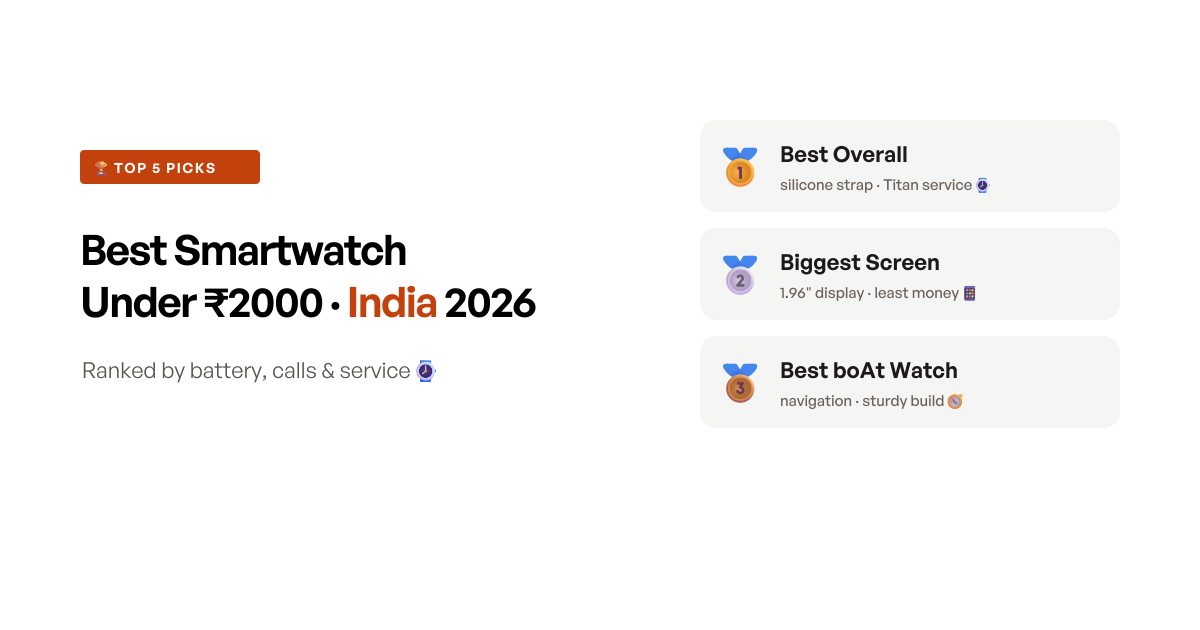
The Fastrack Volt S1 wins this band not by being brilliant but by failing least. In a sub-2,000 aisle whose recent reviews are dominated by dead units, peeling straps and step counts that tick while you sit still, it carries the steadiest owner satisfaction we could find - and it dodges the two traps that sink its rivals. It has a silicone strap, so it physically can’t suffer the coating-peel that ruins the metal-chain watches here, and it’s a Titan watch, so there’s a real service network behind it. The catch is honest: its 1.83-inch screen is a plain LCD, not a sharp AMOLED. If you want the biggest screen for the least money, the Fire-Boltt Ninja X Ring is the 1.96-inch pick at around 1,200; if you want the sharpest screen, the Fire-Boltt Phoenix Nova is the only true AMOLED here - with the reliability gamble that comes with it.
Quick comparison
Five picks side by side, ranked by score - the screen, the real-world battery, whether it pairs with an iPhone, the use case each one wins, and a Buy button for the impatient.
- 8.0 scoreBest overall
Fastrack Volt S1
The watch that fails least under 2000 - a silicone-strap Fastrack with Titan's service behind it, if you can live with a plain LCD screen.
Read the reviewapprox. ₹1,599 - 7.7 scoreBiggest screen
Fire-Boltt Ninja X Ring
The most screen for the least money - a 1.96" display with thin bezels for around 1,200, if you accept an all-plastic build and a fragile charger.
Read the reviewapprox. ₹1,199 - 7.6 scoreBest boAt all-rounder
boAt Storm Call 3
A 1.83" boAt with turn-by-turn navigation and a metal strap owners call sturdy - if you can charge it every two or three days.
Read the reviewapprox. ₹1,409 - 7.5 scoreSharpest screen
Fire-Boltt Phoenix Nova
The only true 466 x 466 AMOLED under 2000 - genuinely crisp and slim, if you accept a metal strap that sheds its coating and Android-only pairing.
Read the reviewapprox. ₹1,499 - 7.5 scoreBest round-dial look
Noise Twist Go Round
The most-bought round watch here, with a respectably sharp dial - if you can accept paywalled faces, loose step counts and slow Noise service.
Read the reviewapprox. ₹1,599
How we shortlisted
“Best smartwatch under 2000” is one of the most crowded searches in Indian tech, and it’s crowded with the same five brands - Noise, Fire-Boltt, boAt, Fastrack, GOBOULT - selling near-identical calling watches that read beautifully on the carton. The honest starting point is that this is a weak band. Read the recent verified reviews for almost any listing here and the same failures recur: units dead or used on arrival, metal-strap coatings flaking within a week, step counters that tick while you sit still, batteries that collapse to a day, and after-sales that either charges you a pickup fee or never replies. Our job wasn’t to crown a great watch - there isn’t one at this price - but to find the ones that fail least, and to be blunt about the compromises on each.
The numbers that mislead most are the three printed largest. The first is battery: a “7-day” or “10-day” figure measured with calling, always-on display and the heart-rate sensor all switched off, which drops to one or two days once you use the watch the way you meant to. The second is screen size: a big 1.96-inch or 2.01-inch panel sounds premium until you notice the resolution behind it can be as low as 240 pixels wide, which is coarse and grainy - the sharpest screen here is the smaller 1.43-inch AMOLED, not the biggest LCD. The third is the strap: “metal build” almost always means a thin coating over base metal that wears through fast, which is why two of our five picks deliberately use silicone instead.
That left five archetypes covering the real choices at this price: the best-serviced, least-likely-to-fail all-rounder (Fastrack Volt S1), the most screen for the least money (Fire-Boltt Ninja X Ring), the sturdiest boAt with wrist navigation (Storm Call 3), the one genuinely sharp AMOLED (Fire-Boltt Phoenix Nova), and the best round-dial look (Noise Twist Go Round). Several popular watches didn’t make it - the ones whose recent reviews are dominated by broken tracking, dying batteries or an app that won’t even recognise the model - and they’re named at the end of this review.
At a glance: 5 smartwatches, what each one is best for
| Smartwatch | Display | Real battery | iPhone? | Best for | Price (approx.) |
|---|---|---|---|---|---|
| Fastrack Volt S1 | 1.83” LCD (240x284) | ~3-5 days | Yes | Best overall | ₹1,599 |
| Fire-Boltt Ninja X Ring | 1.96” IPS (240x296) | ~5-7 days | Yes | Biggest screen | ₹1,199 |
| boAt Storm Call 3 | 1.83” HD (240x240) | ~2-3 days | Yes | Best boAt all-rounder | ₹1,409 |
| Fire-Boltt Phoenix Nova | 1.43” AMOLED (466x466) | ~2-5 days | Android only | Sharpest screen | ₹1,499 |
| Noise Twist Go Round | 1.39” round TFT (454x454) | ~1-2 days | Yes | Best round-dial look | ₹1,599 |
The 5 picks, reviewed
1. Fastrack Volt S1 - best smartwatch under 2000 overall
The Fastrack Volt S1 wins this round on the least glamorous quality there is: it fails least. In a band where the recent reviews of almost every rival are a wall of dead units and flaking straps, the Volt S1’s reviews lean clearly more positive, with owners calling it stylish, comfortable and “full value for money” - one noting the battery still sat at 40 percent on the third day. It isn’t the watch with the best screen or the most features; it’s the one you’re most likely to still be happily wearing in month six.
Two design choices do most of the work. The first is the silicone strap: because there’s no coated metal chain, it physically can’t suffer the coating-peel that ruins the Phoenix Nova and the metal Noise and Fastrack models within weeks. The second is who makes it - Fastrack is owned by Titan, so behind this 1,599-rupee watch is a genuine nationwide service and retail network the pure-play brands simply don’t have. For a category where getting a failed unit looked at is half the battle, that reach matters more than another few pixels.
The reason it scores an 8 and not higher is that the screen is a plain 1.83-inch LCD at 240 x 284 - perfectly readable, but grainy next to the Phoenix Nova’s AMOLED, and one owner found the touch responded slowly and wasn’t “Fastrack-fast.” Battery is also a coin-flip: most owners get the rated five days, but a few report a sudden drop to 48 hours, which usually means a weak cell you’ll want replaced under warranty. It’s non-returnable and a share of units arrive with a broken seal, so make the first week your test window. Buy it for the reliability and the service, not for the display.
Key specifications
- Display
- 1.83" LCD, 240 x 284
- Build
- Silicone strap, polycarbonate case
- Calling
- Bluetooth calling, quick reply (Android)
- Health
- Heart rate, SpO2, sleep, stress
- Sports
- 100+ modes, auto sport recognition
- Water resistance
- IP68
- Battery
- Up to 5 days (Lithium Polymer)
- Weight
- 42 g
- Compatibility
- Android and iOS
- Made in India (Titan)
- Warranty
- 1 year (Titan)
Pros
- The steadiest satisfaction here: the recent reviews lean clearly more positive than any rival's, with owners calling it stylish, comfortable and 'full value for money'
- A silicone strap instead of a metal chain - the single smartest thing about it, because it physically can't suffer the coating-peel that wrecks the Phoenix Nova and Twist Go within weeks
- Real Bluetooth calling, IP68, 100+ sports modes and built-in games, and it pairs with both Android and iPhone
- It's a Titan watch, so there's an actual service and retail network behind it - the reassurance the pure-play brands can't buy
Cons
- The 1.83" screen is a plain LCD at 240 x 284 - one owner flatly said the touch responds slowly and it isn't 'Fastrack-fast'; this is not a sharp AMOLED
- Battery is the coin-flip: several owners get the rated ~5 days, but a few report it draining in 48 hours or dropping suddenly, which points to a weak cell
- It's non-returnable, and a share of units arrive with a broken seal or a cracked corner - so the first-week check matters
- The strap connector is plastic, not steel, and the interface looks a little juvenile to some buyers
Who should buy this
The buyer who has been burned by a cheap watch before and wants the one that fails least - not the flashiest screen, but the steadiest reviews, a strap that won't flake, and Titan's service to fall back on. Best for someone who mainly wants notifications, calls and casual step-counting under 2,000 and values a brand they can actually reach over another few pixels of screen. It pairs with both Android and iPhone.
Skip if
Skip if a sharp, punchy screen is what you care about most, because this is a plain LCD - the Fire-Boltt Phoenix Nova is the only true 466 x 466 AMOLED in this list, as long as you accept its metal strap will shed its coating.
Ready to buy?
Fastrack Volt S1
2. Fire-Boltt Ninja X Ring - biggest screen for the least money
The Fire-Boltt Ninja X Ring answers a specific question: what’s the most screen you can buy for the least money? At around 1,200 the answer is a big 1.96-inch display with thin bezels that owners repeatedly compare to far pricier watches - one called it “apple alike,” another “a premium experience on a budget.” It’s the cheapest pick here, and it throws in hardware the rivals skip at this price: wireless charging, a rotating crown, 500+ watch faces and built-in games. Better still, its roughly 7-day battery claim is one of the few in this band owners actually confirm for light use, with a quick two-hour charge.
It helps that the review base is deep and mostly satisfied for a Fire-Boltt, and one owner reports three trouble-free years - unusually long-term feedback for a watch this cheap.
The compromises are the ones you’d expect at 1,200, and they’re worth naming. The body is entirely plastic and light, and one owner had the strap-attachment point snap on day one. The charging cable is the clear weak link - “charger stopped working after 3 weeks” recurs across the reviews, and Fire-Boltt’s service is slow to reply. The nylon-strap variant drops the always-on display, and the vibration is weak enough that some owners miss timer and call alerts. And as with everything here, a share of units arrive dead or grow lines across the screen within a day, so buy Amazon-fulfilled and test it the moment it lands. Take it for what it is: the most display for the money, with plastic and a fragile charger as the price.
Key specifications
- Display
- 1.96" IPS, 2.5D curved glass, 240 x 296
- Build
- Plastic case, nylon strap
- Navigation
- Rotating crown
- Calling
- Bluetooth calling, AI voice assistant
- Charging
- Wireless charging, ~2 hr
- Battery
- 280 mAh, up to 7 days claimed
- Water resistance
- IP67
- Health
- Heart rate, SpO2, sleep, stress
- Weight
- 46 g
- Compatibility
- Android and iOS
- Warranty
- 1 year
Pros
- The most display for the money here: a 1.96" screen with thin bezels that owners repeatedly call premium and 'apple alike', for around 1,200
- Wireless charging and a rotating crown at this price - a genuine bit of hardware the rivals skip - plus 500+ watch faces and built-in games
- Battery owners actually praise: several report the ~7-day claim holding up for notifications and step tracking, with a roughly 2-hour charge
- One long-term owner reports three years of use with no trouble, which is rare feedback in this band
Cons
- The body is entirely plastic and light, and one owner had the strap-attachment point snap on the first day
- The charging cable is the weak link - 'charger stopped working after 3 weeks' recurs, and Fire-Boltt's service is slow to reply
- The nylon-strap variant has no always-on display, and vibration is weak enough that owners miss timer and call alerts
- A share of units arrive dead or develop lines across the screen within a day - buy Amazon-fulfilled and test on arrival
Who should buy this
The buyer who wants the biggest possible screen for the smallest possible spend and is clear-eyed that plastic and a fragile charger are the price of it. At around 1,200 it's the cheapest watch here worth owning, the display is genuinely big and bright, and the wireless charging and crown are real extras. Best for a light user who mainly wants a large, readable face for notifications, calls and steps, and who buys Amazon-fulfilled so a dead unit is an easy return.
Skip if
Skip if you want a watch that feels solid on the wrist or a charger you can trust, because it's all-plastic and the cable is the top complaint - the Fastrack Volt S1 is the better-built, better-serviced pick for about 400 more.
Ready to buy?
Fire-Boltt Ninja X Ring
3. boAt Storm Call 3 - best boAt all-rounder
The boAt Storm Call 3 is the pick for someone who wants a watch that feels more solid than its price and does something the others don’t. Its headline trick is turn-by-turn navigation on the wrist, routed through your phone’s GPS, alongside Emergency SOS and a QR tray - genuinely useful on a commute. The 1.83-inch HD screen is bright, boAt’s Watch Face Studio and 700+ active modes give it depth, and the metal strap and case draw real praise: one owner who expected the strap to feel flimsy said it turned out “in fact very well made.”
boAt’s after-sales, for all its faults, is at least reachable, and the watch pairs with both Android and iOS.
Two things keep it mid-table. The first is battery: many owners get only two to three days, and a few describe a watch that runs, dies for a few days, then revives - the signature of a failing unit. The second is weight - at 130 grams it’s the heaviest watch here, which smaller wrists feel, and the side knob that doubles as the power button is a known failure point, dead within 24 hours for one unlucky buyer. Step counting is loose, occasionally wiping a day’s data, and a share of units stop working inside three months. Buy it for the navigation and the sturdy strap, charge it every couple of days, and lean hard on the return window if the button or charging behaves oddly early.
Key specifications
- Display
- 1.83" HD, 240 x 240
- Build
- Metal strap and case
- Navigation
- Turn-by-turn (GPS via phone)
- Calling
- Bluetooth calling
- Extras
- Emergency SOS, QR tray, 700+ active modes, games
- Water resistance
- IP67
- Health
- Heart rate, SpO2, sleep
- Weight
- 130 g
- Compatibility
- Android and iOS
- Warranty
- 1 year
Pros
- Turn-by-turn navigation on the wrist - routed through your phone's GPS - which no other watch here offers, plus Emergency SOS and a QR tray
- A metal strap and case that owners repeatedly call sturdy and premium; one specifically said it looked flimsy but is 'in fact very well made'
- boAt's Watch Face Studio, 700+ active modes and built-in games, on a bright 1.83" HD screen
- boAt's service is at least reachable, and the watch pairs with both Android and iOS
Cons
- Battery is the recurring letdown - many owners get only two to three days, and a few describe an on-off-for-days cycle that suggests a failing unit
- It's heavy at 130g, so smaller wrists feel it, and the side knob (which is also the power button) is a known failure point - one owner's died in 24 hours
- Step counting is loose: owners report it over- or under-counting, and one had a day's data wiped
- A share of units stop working within three months, so treat the return window as your real warranty
Who should buy this
The buyer already in boAt's world - or one who wants wrist navigation and SOS on a watch that looks and feels more solid than its price - and who charges their watch every couple of days without minding. Best for a commuter who values the turn-by-turn directions and a sturdy metal strap over long battery, buys Amazon-fulfilled, and checks the side button and charging behaviour hard in week one.
Skip if
Skip if you hate charging or have slim wrists, because it's a heavy 130g watch that many owners charge every two to three days - the Fire-Boltt Ninja X Ring is lighter with a longer-lasting battery if navigation isn't the draw.
Ready to buy?
boAt Storm Call 3
4. Fire-Boltt Phoenix Nova - the sharpest screen
The Fire-Boltt Phoenix Nova is here for one reason, and it’s a good one: it has the sharpest screen under 2,000 by a distance. Where everything else in this list sits around 240 pixels wide, the Phoenix Nova is a 1.43-inch AMOLED at a genuinely crisp 466 x 466 with an always-on mode - the same resolution as watches costing far more. Owners who get a good unit are unreserved about it: “best quality, best display, best always-on display, no lag, proper Bluetooth calling.” It’s slim and light at 60 grams too, in a metal case that reads more expensive than it is.
The reason it lands fourth rather than first is that the screen is the only thing you can rely on. Its defining flaw is the strap: the coating on the steel-link band flakes off within the first week or two for a large share of owners, exposing duller metal underneath. And the broader reliability is a lottery - auto on-off, a sensor that stops reading, chargers dying in a month and white-screen failures inside six months all recur across the recent reviews. It also pairs with Android only, so iPhone users are out, and always-on display roughly halves the battery to about two days. Buy it if the display is what you care about most, buy it Amazon-fulfilled so a bad unit is returnable, and plan to swap the flaking strap for a plain one on day one.
Key specifications
- Display
- 1.43" AMOLED, 466 x 466, always-on
- Build
- Stainless steel link band, metal case
- Calling
- Bluetooth calling, built-in mic and speaker
- Health
- Heart rate, SpO2, sleep
- Water resistance
- IP67
- Battery
- Up to 7 days claimed (~2 days with AOD on)
- Weight
- 60 g
- Compatibility
- Android only
- Warranty
- 1 year
Pros
- The sharpest screen under 2,000 by a distance - a 1.43" AMOLED at 466 x 466 with always-on that owners call crisp and no-lag, with proper Bluetooth calling
- Genuinely slim and light at 60g, in a metal case that reads far pricier than it costs
- The AMOLED holds up in sunlight, and the removable strap means you can swap the weak stock band
- Owners who get a good unit are enthusiastic: 'best quality, best display, best always-on, no lag, proper Bluetooth calling'
Cons
- The steel-link strap's coating is the defining flaw - owners report the colour flaking off within the first week, sometimes within days
- Reliability is a lottery: auto on-off, a sensor that stops reading, chargers dying in a month and white-screen failures inside six months all recur
- It pairs with Android only, so iPhone users should look elsewhere
- The stock metal band is awkward to fasten one-handed, and always-on display roughly halves the battery to about two days
Who should buy this
The buyer who wants the best-looking, sharpest screen for the money and will accept a reliability gamble to get it. When the Phoenix Nova works, its 466 x 466 AMOLED is in a different class from everything else here, and it's slim and light. Best for an Android user who cares most about the display, buys Amazon-fulfilled so a bad unit is returnable, and is ready to swap the flaking steel strap for a plain one on day one.
Skip if
Skip if you use an iPhone or can't stand visible wear, because it's Android-only and the strap coating peels within weeks - the Fastrack Volt S1 pairs with both platforms and its silicone strap won't flake.
Ready to buy?
Fire-Boltt Phoenix Nova
5. Noise Twist Go Round - best round-dial look
The Noise Twist Go Round is for the buyer who’s tired of wearing another black rectangle. It’s a proper round dial in a glossy metal build owners call elegant, and it’s by far the most-bought round watch in this band - which means its behaviour is the best-understood of anything in this review. The screen is a pleasant surprise too: at 454 x 454 on a 1.39-inch round panel it’s respectably sharp for the price, and call quality gets rated as clear by several owners. The silicone strap won’t peel like the metal-chain rivals, it’s light and comfortable, and it pairs with both Android and iPhone.
It shares the floor score with the Phoenix Nova because its problems are software and service rather than looks. Step tracking is genuinely loose - owners report counts running roughly three times high, ticking up while seated or on a bike - so this is a notifications watch, not a fitness one. Some watch faces sit behind a NoiseFit subscription that buyers only discover after paying, battery routinely lands at one to two days rather than the rated week, and displays failing within two months recur. Worst of all is Noise’s after-sales: owners describe a 149-rupee pickup fee just to process a warranty replacement, and slow, scripted responses. Buy it for the round look and the sharp dial, confirm which faces are free before you pay, and buy Amazon-fulfilled so the return window is your safety net.
Key specifications
- Display
- 1.39" round TFT, 454 x 454
- Build
- Glossy metal dial, silicone strap
- Calling
- Bluetooth calling
- Health
- Heart rate, SpO2, sleep
- Water resistance
- IP68
- Battery
- 210 mAh, up to 7 days claimed
- App
- NoiseFit (some faces need a subscription)
- Compatibility
- Android and iOS
- Warranty
- 1 year
Pros
- The round-dial look this aisle mostly lacks, in a glossy metal build owners call elegant - and by far the most-bought round watch in the band
- A respectably sharp screen for the price - 454 x 454 on a 1.39" round panel - with call quality several owners rate as clear
- Light and comfortable, with a silicone strap that won't peel like the metal-chain rivals, and it pairs with both Android and iPhone
- The most-reviewed option here, so its behaviour is the best-understood of any watch in this review
Cons
- Step tracking is genuinely loose: owners report counts running roughly three times high, ticking up while seated or on a bike
- Some watch faces sit behind a NoiseFit subscription, which owners only discover after buying
- Battery is a common complaint - many get just one to two days, not the rated week - and displays failing within two months recur
- Noise's after-sales is the weak point: owners describe a Rs149 pickup fee for a warranty replacement and slow responses
Who should buy this
The buyer who specifically wants a round watch that looks like a watch, not another black rectangle, and is happy to use it for notifications, calls and casual steps rather than real fitness data. It's the most popular round pick here, the dial is sharp for the price, and the silicone strap won't flake. Best for a style-first buyer who will ignore the step count, confirm which faces are free before paying, and buy Amazon-fulfilled.
Skip if
Skip if you want accurate fitness tracking or resent paying for watch faces, because the step count runs high and some faces are paywalled - the Fastrack Volt S1 is the better-serviced everyday watch if the round look isn't essential.
Ready to buy?
Noise Twist Go Round
The features explained, in plain English
Smartwatch listings lean on a handful of terms that sound technical but decide everything once you know what they mean - and at this price, knowing them is mostly about spotting what’s being oversold.
AMOLED versus LCD - and why resolution beats size. An AMOLED screen (the Phoenix Nova here) lights each pixel individually, so blacks are truly black and colours pop; an LCD (the Volt S1 and Storm Call 3) uses a backlight, so blacks look grey. But the number that actually decides sharpness is resolution against size. The Phoenix Nova packs 466 x 466 into a small 1.43-inch panel and looks crisp; most of the big-screen watches here sit around 240 pixels wide, which is visibly grainy no matter how large the display. The Noise Twist Go Round is the exception among the non-AMOLEDs, with a sharp 454 x 454 round screen. A bigger screen is not automatically a better one - pixels-per-inch is what your eye reads.
What the battery number really means. The headline figure - “7 days,” “10 days” - is measured in the gentlest possible conditions: calling off, always-on display off, heart-rate sensor barely sampling. Switch on the features you actually bought the watch for and it drops sharply, which is why a “7-day” Noise can land at a day or two. The honest way to read these is to roughly halve the number, then check the reviews for the real figure - and watch for the failure pattern where a battery suddenly collapses to under a day after a few months, which means a dying cell rather than normal drain. The Fire-Boltt Ninja X Ring is the one here whose claim owners come closest to confirming.
IP68 and IP67 - what they do and don’t cover. These ratings mean the watch is dust-tight and protected against sweat, rain and brief splashes - fine for handwashing or getting caught in the monsoon. What they are not is a swim rating. The rating you need to actually swim is 5ATM, and nothing in this band has it - that capability starts a couple of price tiers up. Owners have killed IP-rated watches by pushing them underwater, so treat IP68 as splash-proof, not pool-proof.
“Metal build” and the coating trap. When a listing says metal build or steel strap at this price, it almost always means a base metal with a thin coloured coating, and that coating wears through fast. It’s the single most common cosmetic complaint here, and it’s why two of our picks use silicone instead. If you want a metal look that lasts, this budget can’t reliably give it to you - so either accept you’ll swap the strap, or choose silicone from the start.
Complete buying guide
How much should you actually spend on a smartwatch?
There’s a sensible floor and a sensible ceiling here, and where you land changes what you get. Below about 800 rupees you’re into re-badged fitness toys that won’t reliably beat the notifications already on your phone. The genuine sweet spot in this review is roughly 1,200 to 1,600, where a real calling watch with a decent screen and honest-enough battery lives - four of our five picks sit here. Spending the extra few hundred to touch 2,000 mostly buys you looks or a specific feature (an AMOLED, wrist navigation), not more reliability. And that’s the honest ceiling of this band: no amount of money under 2,000 buys accurate fitness data, in-built GPS, a swim rating, or a watch you can count on past a year.
Here’s the money, tier by tier:
- Around ₹1,000-1,300: the most screen for the least outlay - a big display, real Bluetooth calling and basic tracking. Accept plastic, a fragile charger and rough accuracy. The Fire-Boltt Ninja X Ring lives here.
- Around ₹1,400-1,600: the sweet spot - a better-built, better-serviced calling watch (the Fastrack Volt S1), a sturdy navigation watch (boAt Storm Call 3), or a sharp AMOLED (Phoenix Nova). Still no real fitness precision.
- Stretch to ₹2,500-3,000: the point where reliability and screen genuinely improve - our best smartwatch under 3000 round covers sharper AMOLEDs and stronger service networks, and it’s the smallest stretch that meaningfully changes what you get.
Specs that matter, and specs that don’t
Three things actually decide whether you’ll be happy at this price: reliability, an honest battery, and a brand you can reach when it breaks. Reliability barely shows on the spec sheet - you read it out of the verified reviews, in the pattern of dead screens, failed buttons and batteries collapsing after a few months - and it matters more than any printed number. Battery is next, and the trick is to ignore the box and find the real figure in the reviews. Then comes service: at this price the watch will eventually need it, and whether the brand answers is the difference between a repair and a paperweight, which is why Titan behind the Fastrack counts for so much. The specs that deserve less of your attention are the ones shouted loudest: the rated battery total (halve it), the count of sports modes and watch faces, the “AI” label, and raw screen size taken alone - a big panel at low resolution is worse than a smaller sharp one.
Service and warranty - the reality check
Every watch here carries the same one-year manufacturer warranty, which is short for something people hope to keep for two or three years - so the return window often matters more than the warranty card, and the brand behind it matters most of all. The clearest lessons in these reviews are about what happens when a unit fails. The name with the widest real-world service reach is Titan, which owns Fastrack, simply because it has physical service infrastructure across the country; the pure-play watch brands are a step behind, and it shows. The recent reviews of the watches we dropped are full of the ugly version: a display going blank within a week, a warranty replacement that demands a pickup fee, service centres that don’t recognise the model, and replacement requests that go unanswered. The practical takeaways: buy from an Amazon-fulfilled listing so the return window is your reliable safety net, register the warranty and keep the invoice on day one, and if you live in a smaller city, lean on that first-week window especially hard - a manufacturer service visit is far less certain outside the metros.
When to buy and when to wait
Smartwatches at this price refresh constantly, and there’s rarely a dramatically better successor worth waiting for, so you can buy when you need one - the real lever is price, not timing the model cycle. These are exactly the products the big sale events discount hardest: the Great Indian Festival around October, plus the Republic Day and summer sales, reliably push them below their everyday street prices. The gap from MRP is stark - several of these watches carry a 6,999, 9,999 or even 21,000 list price and sell every day for a fraction of that - so the “discount” on the listing is mostly theatre; judge the watch on its street price, not the struck-through number. If your need isn’t urgent, timing the purchase to one of those sales saves a little; if you need a watch now, any of our five is sound at its everyday price.
What we don’t recommend (and why)
Several popular watches we researched didn’t make the cut, and the reasons are instructive. The Noise Pulse 2 Max (around 1,500) is one of the most-bought watches in the band, but its recent reviews are dominated by broken step tracking - counts climbing while owners sit still - alongside dead units after a few months and an app owners describe as full of ads; the Fastrack Volt S1 is the more dependable everyday watch. The boAt Wave Sigma 3 (around 1,500) has a genuinely distinctive 2.01-inch curved screen, but its reviews carry a recurring battery-dies-in-a-day complaint and a stuck-vibration bug that can drain the watch buzzing continuously - too unreliable to recommend over the Storm Call 3. The boAt Lunar Discovery Neo (around 1,300) has the worst-documented problem of all: for many owners the exact model isn’t listed in the boAt app, so the watch never pairs and can’t even set the time - and it’s non-returnable. And we set aside the Fastrack Limitless X2 (around 1,700), a nice-looking rotating-crown watch that resets itself every two or three days, won’t restart after a full drain, and turns up at Fastrack stores that say they don’t service the model. In a category this crowded, the watches you avoid matter as much as the ones you pick.
Frequently asked questions
Which is the best smartwatch under 2000 in India in 2026?
For most buyers it's the Fastrack Volt S1. In a band where nearly every listing's recent reviews are full of dead units, peeling straps and broken step counts, it carries the steadiest owner satisfaction we could find, and it dodges the two traps that sink its rivals: it has a silicone strap, so it can't suffer the coating-peel that ruins the metal-strap watches here, and it's a Titan watch, so there's a real service network behind it. It does real Bluetooth calling, is IP68 rated, and pairs with both Android and iPhone. The one thing to accept is that its 1.83-inch screen is a plain LCD, not a sharp AMOLED - this is a pick that wins on reliability, not looks. If you want the biggest screen for the least money, the Fire-Boltt Ninja X Ring is the 1.96-inch pick at around 1,200; if you want the sharpest screen, the Fire-Boltt Phoenix Nova is the only true 466 x 466 AMOLED here.
Is a smartwatch under 2000 worth buying, or should I spend more?
It's worth buying only if you're honest about what this budget gets you: a good-looking watch that does notifications, Bluetooth calls and rough step and heart-rate counting. That's genuinely useful. What it does not get you is accurate fitness data, in-built GPS, a swim rating, or dependable long-term reliability - the recent reviews across this whole band are thick with units that die in a few months and after-sales that barely answers. If your use is calls, alerts and casual step-counting, a careful pick here is enough. But if you can stretch even a little, the tier just above is a real step up in reliability and screen: our [best smartwatch under 3000](/reviews/best-smartwatch-under-3000-india) round covers watches with sharper AMOLEDs and stronger service, and if you want genuine GPS or a 5ATM swim rating you need to go further still, to our [best smartwatch under 5000](/reviews/best-smartwatch-under-5000-india) picks.
Which smartwatch under 2000 has the best battery life?
The Fire-Boltt Ninja X Ring is the safest bet for battery here - its roughly 7-day claim is one of the few in this band that owners actually confirm for light notification-and-step use, helped by a 280 mAh cell and a quick two-hour charge. Be realistic about the rest: almost every watch in this price range prints a big battery number measured with calling, always-on display and heart-rate all switched off, and the real figure collapses once you turn those on. The Noise Twist Go Round's rated week routinely lands at one to two days in owner reviews, the boAt Storm Call 3 at two to three, and the Fastrack Volt S1 is a coin-flip between its rated 5 days and a sudden drop to 48 hours on weaker units. If battery is your single priority, keep always-on display off and buy the Ninja X Ring - or step up a tier, where the Redmi Watch 5 Active in our under-3000 round is the genuine battery champion.
Which smartwatch under 2000 has the sharpest display?
The Fire-Boltt Phoenix Nova, and it isn't close. It's the only watch in this band with a true 466 x 466 AMOLED, which is genuinely crisp and vivid with an always-on mode, and owners who get a good unit praise the display specifically. The Noise Twist Go Round is the runner-up with a respectable 454 x 454 round screen, though it's a TFT panel rather than AMOLED, so blacks aren't as deep. Everything else here is a coarser LCD: the Fastrack Volt S1 and boAt Storm Call 3 sit around 240 pixels wide, which is fine for telling the time and reading notifications but visibly grainy up close. Just know the trade-off with the Phoenix Nova: its screen is the best here, but its steel strap sheds its coating early and it pairs with Android only, which is exactly why it isn't our overall pick.
Are smartwatches under 2000 accurate for steps and heart rate?
No - treat everything in this band as a rough motion counter, not a fitness instrument. Inaccurate step tracking is the single most common complaint across these watches: owners report counts ticking up while they sit still, roughly tripling the real number, or logging steps on a motorbike. The Noise Twist Go Round and Noise Pulse 2 Max draw this complaint loudest, and even the better picks here are only approximate. Heart-rate readings are similarly for-trends-only, and none of these have the in-built GPS you'd need for accurate distance or pace. If you want the numbers to mean something - to actually train on them - you have to step up: the watches in our [best smartwatch under 5000](/reviews/best-smartwatch-under-5000-india) round add real GPS and far better sensors. Under 2,000, buy for notifications and calls, and take the fitness data as motivation, not measurement.
Why do the metal straps on these watches peel so quickly?
Because the 'metal' strap on most sub-2,000 watches is a base metal with a thin coloured coating on top, and that coating wears through fast against skin, sweat and daily knocks. It's the defining complaint on the Fire-Boltt Phoenix Nova and the metal-chain Noise and Fastrack models: owners report the black or gold finish flaking off within the first week or two, exposing a duller metal underneath. It doesn't affect how the watch works, but it looks shabby quickly. There are two ways around it. The first is to pick a watch with a silicone strap in the first place - which is a real reason the Fastrack Volt S1 is our top pick and the Noise Twist Go Round survives, since neither can peel. The second is to buy a plain replacement strap for a couple of hundred rupees on day one and set the coated one aside.
Which smartwatch under 2000 works with an iPhone?
The Fastrack Volt S1, Fire-Boltt Ninja X Ring, boAt Storm Call 3 and Noise Twist Go Round all list iOS support and pair with an iPhone, so any of them is a reasonable choice for Apple users - the Volt S1 is the safest of the four thanks to Titan's service. The one to avoid on an iPhone is the Fire-Boltt Phoenix Nova, which its own listing marks as Android-only. A general caution for iPhone users at this price: even watches that 'support' iOS often handle notifications and calls less reliably on an iPhone than on Android, because Apple limits what third-party watches can do. Whichever you pick, make a real call and check notifications inside your return window. If you're deep in Apple's world and can spend far more, an Apple Watch SE is a different class of device - our [best smartwatch in India](/reviews/best-smartwatch-in-india) round covers that tier.
What's the catch with a smartwatch that lists at 9,999 and sells for 1,200?
The catch is that the 9,999 was never a real price. Almost every watch in this band carries a wildly inflated MRP - the Fire-Boltt Ninja X Ring lists at 9,999, the Phoenix Nova at 21,000 - and sells every single day for a fraction of that. The struck-through 'discount' is theatre designed to make the everyday price look like a steal. It doesn't mean the watch is bad; it means you should ignore the MRP entirely and judge the watch on its actual street price and its verified reviews. The genuine risk at this price isn't the fake discount, it's reliability and after-sales - which is exactly why we weight what owners report about failures and service far more heavily than any number on the box.
How long will a smartwatch under 2000 actually last?
Honestly, plan for about a year and hope for more. The pattern across the recent reviews in this band is clear: a meaningful share of units fail somewhere between a few months and the end of the one-year warranty - a screen going white, a button dying, a battery collapsing to under a day, or charging stopping altogether. A lucky minority report two or three years of trouble-free use, but you can't count on being one of them at this price. Two things tilt the odds your way. First, buy from a listing sold and shipped by Amazon so the return window is a reliable safety net for the dead-on-arrival and early-failure cases, which are common. Second, favour a brand with real service reach - Titan behind the Fastrack, or the wider chains - because a one-year warranty is only as good as the service centre you can actually reach when the watch fails.
The bottom line
There’s no flawless smartwatch under 2,000 - the whole band runs on inflated MRPs, optimistic battery claims, peeling straps and patchy after-sales - so the right call is the one that turns this budget into the fewest regrets. For most buyers that’s the Fastrack Volt S1: not the sharpest screen, but the steadiest owner satisfaction, a silicone strap that won’t flake, and Titan’s service to fall back on. If you want the most screen for the least money, the Fire-Boltt Ninja X Ring is the 1.96-inch pick at around 1,200; if you want wrist navigation and a sturdy build, the boAt Storm Call 3 delivers it; if the display is all you care about, the Fire-Boltt Phoenix Nova is the one true AMOLED here, reliability gamble and all; and the Noise Twist Go Round is the round-dial look nothing else here offers. Whichever you choose, test the calling, the battery and the screen in the first week - at this price that single habit is what protects you most. We’ll refresh this review after the next big sale season with a fresh read of the verified reviews and whatever new models have landed.